Guardianes del Crepúsculo es una historia que sucede en el centro de Asia, o tal vez mejor, en el centro de muchas de nuestras preguntas sobre los caminos fascinantes del Evangelio. Es una novela corta (o cuento largo) que puedes encontrar y leer aquí:
Apocalypto
La última película de Mel Gibson tiene un mensaje cultural y filosófico que puede quedar oculto por la abundancia de sangre y por el aspecto semi-salvaje de las sociedades allí expuestas. Mi análisis es que Gibson quiere afirmar unas cuantas verdades sobre la naturaleza humana y que apelar a lo primitivo no es un derroche de exotismo sino pura continuidad con el experimento mental de pensadores como Juan Jacobo Rousseau.
En efecto, la idea difundida en y por los medios anglosajones es que los habitantes precolombinos eran buenos y que toda corrupción vino de fuera, de los europeos, y en particular, españoles. Este argumento ideológico ha servido de ariete para hacer avanzar la llamada “Leyenda Negra” que sólo ve en el proceso de conquista y colonia en América una vergüenza de la humanidad, o sea, una serie ininterrumpida de atropellos adobados en el más puro sadismo.
Continuar leyendo “Apocalypto”
49. Verdadera y Falsa Espiritualidad
49.1. En el Nombre del Padre, y del Hijo, y del Espíritu Santo.
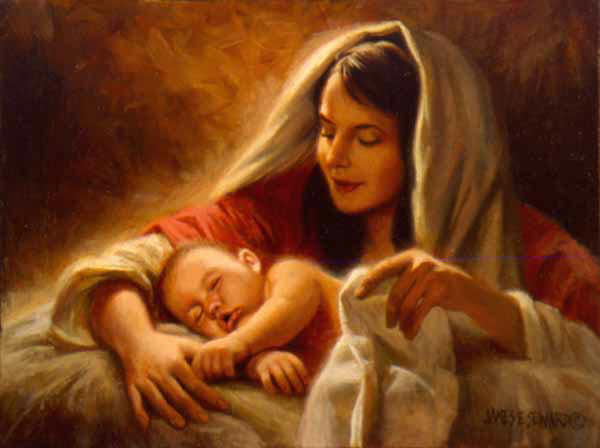
49.2. Yo te saludo saludando a Dios, y así quiero que me saludes también tú. Para vida vuestra y salvación vuestra nos envió Dios, no para que nazca confusión alguna en nadie. Ya el Nuevo Testamento te habla de algunos que cayeron en confusión, no por ministerio nuestro, sino de los Ángeles caídos. Por eso Pablo advirtió con severidad: «Que nadie os prive del premio a causa del gusto por ruines prácticas, del culto de los Ángeles, obsesionado por lo que vio, vanamente hinchado por su mente carnal, en lugar de mantenerse unido a la Cabeza, de la cual todo el Cuerpo, por medio de junturas y ligamentos, recibe nutrición y cohesión, para realizar su crecimiento en Dios» (Col 2,19).
330. La Casa de los Relatos
330.1. Quiero decirte que el Cielo es como un lugar donde se escuchan muchos relatos. Esa palabra es bella y útil para el propósito de esa enseñanza que quiero darte. Un relato no es un discurso, ni un tratado, ni una descripción, ni un ensayo. Lo propio del relato, o cuento, es unir la verdad de alguien con una secuencia de hechos o eventos. De esa manera los relatos presentan una verdad en movimiento.
330.2. Jesús usó muchos relatos, que suelen llamarse parábolas. Entre las muchas razones para usar esa forma de predicar, una es que la mente humana está especialmente predispuesta a recibir relatos. Dios la diseñó así, puedes decir. Los relatos, o por lo menos: los buenos relatos, integran la condición más profunda de la existencia del hombre, que es la temporalidad, con el anhelo más profundo del mismo hombre, que es la verdad.
48. Peregrino
48.1. En el Nombre del Padre, y del Hijo, y del Espíritu Santo.

48.2. Veo tu cansancio. Te pesa el trabajo, te pesa la oración; te cuesta amar, no te es fácil perdonar, te resulta duro sostenerte en los buenos propósitos y negarte a las insidias de tu propia carne mal acostumbrada y cómoda. Es difícil ser bueno: he aquí la cruda comprobación que hace tu alma; un descubrimiento que no te alegra y que hace que el tiempo se dilate como cielo de bronce sobre tu cabeza (cf. Dt 28,23).
47. La Casa de Luto
47.1. En el Nombre del Padre, y del Hijo, y del Espíritu Santo.
47.2. Así como hay un mundo que se extiende ante tus ojos, hay un mundo, un universo entero que sucede allí donde tus ojos no pueden ver. Piensa en el sacramento de la confesión. Un pecador arrepentido recibe la absolución de sus culpas. Tú le ves entrar y luego salir de la iglesia donde se confesó, y probablemente no notas nada en él, quizá sólo una leve sonrisa y una mirada más despejada y tranquila. Y sin embargo, ¡qué cambios extraordinarios han sucedido! Alejado del amor, ajeno a la gracia, hace unas horas o unos días pensaba sólo en venganza; ahora, por la obra del Espíritu Santo, ha trocado sus pensamientos.
46. Partícipes de su Naturaleza Divina
46.1. En el Nombre del Padre, y del Hijo, y del Espíritu Santo.
46.2. No siempre debo hablarte cuando sientas que la piedad y el amor fluyen en ti, porque yo no dependo de ti, aunque soy servidor tuyo en orden a la salvación que Dios te ofrece.
46.3. Hoy quiero invitarte a hacer más universal tu oración. Dirige tus plegarias más allá de tus intereses; lánzalas, como redes de amor, al mar de las necesidades humanas, y no las limites al tamaño de tus estrechos conocimientos y pequeños afectos. Cuanto más unido estés a Dios, más debes cuidar que tu oración sea según Él, según su querer y según su sabiduría, y no según el tamaño de tus preocupaciones inmediatas o tus dolores más agudos.
Mensaje para el Nuevo Año
Amigos en la fe:
La vida, como un río, tiene momentos de transcurrir sosegado y tiene cascadas. Fluye a veces en el ritmo monótono de una rutina que incluso nos cansa; otras veces, se precipitan en rápida sucesión cambios o sorpresas que pueden alegrarnos o deprimirnos súbitamente.
Llegan de pronto otros tiempos en que las aguas se remansan. Algo adentro y algo afuera nos llama a reflexión. Es preciso hacer un alto y darnos tiempo para unas cuantas preguntas profundas. Son los momentos densos de nuestra existencia.
Me he preguntado a veces en qué consiste esa densidad o qué hace que ciertos días estemos más receptivos y más sensibles a los temas hondos de la vida. Creo que es algo que tiene que ver con el tiempo. Al fin y al cabo, como alguno dijo, todo lo que tenemos y lo único que tenemos es tiempo. Los hilos de nuestra temporalidad son los hilos mismos de nuestra vida. Y al fin y al cabo, ¿qué es vivir, sino ir trenzando con mayor o menor acierto esos tres hilos que se llaman presente, pasado y futuro?
Imaginemos un día sin pasado. Es como imaginar a una persona que un día despierta sin saber quién es, ni qué responsabilidades tiene ni de qué derechos goza. ¿Qué día esperaría a una persona así, qué podría tejer?
Imaginemos un día sin futuro. ¡Vaya pesadilla! Lamentablemente es algo que muchos de nuestros contemporáneos conocen: NO-FUTURO. Tal es el nombre de la falta absoluta de esperanza. Y bien sabemos, con dolor, que quien pierde un horizonte y una razón en su futuro, pierde también toda capacidad de actuar en su día presente.
¿Y es posible imaginar un día sin presente? Aunque parezca extraño, yo creo que sí es posible. Es sencillamente la experiencia de la muerte. A la hora de nuestra partida, ¿qué tendremos? Un pasado: lo vivido. Un futuro: el más allá. Ya no habrá más tiempo para cambiar nada. El presente se habrá reducido a un punto, una línea que no podemos controlar, una puerta en que no somos jueces sino más bien juzgados.
Nuestros tres hilos tienen distintos colores y distintas melodías. Cada día hacemos una canción cuando vivimos; hemos pintado un cuadro cada día, cuando volvemos al descanso del lecho apetecido. A veces nuestra canción es disonante o nuestro cuadro es horroroso. Hay días que no quisiéramos que se contaran en nuestra cuenta. Otras veces la música es grato y el cuadro hermoso.
Hay momentos en que necesitamos ver qué estamos pintando y oír qué es lo que cantan nuestros pasos en su trasegar fatigoso y acelerado. Esos son los momentos densos, y probablemente, al llegar al umbral de un año nuevo, nuestros hilos brillan con peculiar nitidez y por eso sentimos que tenemos que revisar qué hemos hecho, qué estamos haciendo y qué tenemos que hacer.
En estos momentos, amigos, lo que yo pido al Cielo es que nos regale luz. Nuestros hilos no vienen de la nada, sino de Dios, que “nos amó primero,” como enseña San Juan. Y por eso nuestro pasado estará claro y a salvo sólo en sus manos. Nuestros hilos no van hacia el abismo, sino hacia Dios, que “prepara casa a los desprotegidos,” como canta el salmo. Sólo en la luz divina encontramos paz con lo que hemos sido y serena esperanza sobre lo que podemos ser. Sólo en esa luz descubrimos cuántas de nuestras tragedias eran en realidad oportunidades y sólo en ella aprendemos a agradecer nuestros bienes en Aquel que es la Fuente de todo bien.
Por mérito de la plegaria eficaz de la Santa Madre de Dios, cuya fiesta inaugura el nuevo año, venga sobre la Tierra un diluvio de nueva luz y de gracia, para que, valorando nuestro tiempo según la sabiduría de lo Alto, hacia la altura se orienten nuestros sueños y también nuestros pasos.
¡Feliz Año para todos!
Fr. Nelson Medina, O.P.
45. Astronautas y Pintores
45.1. En el Nombre del Padre, y del Hijo, y del Espíritu Santo.
45.2. El tamaño depende de la distancia: eso lo saben los pintores y los astronautas. Necesitarás ser un poco pintor y un poco astronauta para lograr el tamaño justo de cada cosa, porque vivir en la verdad no es sólo saber qué son las cosas en sí mismas sino cómo son con respecto a las demás, es decir, conocer su tamaño.
St. Martin de Porres (9 of 9)
Joyful Friar
- During this Novena, that now arrives to an end, we have willingly remembered St. Martin as a joyful, kind, friendly man: the sort of people that we call: approachable. That is a beautiful expression: Behold a saint that is also a most approachable fellow.
- Joyfulness is linked with some serious virtues. A bit of humor is a way of not taking ourselves too seriously. Moreover, you need a fair amount of gladness to announce the Good News enduring all the risks, drawbacks and failures, and facing people’s irony, indifference or even aggression.
- Gladness is also the hallmark of a pacified soul. And peace is the ultimate gift, according to another Dominican, St. Thomas Aquinas. Inner peace spells harmony, contentment, awareness of all the other gifts God has granted us in his Beloved Son.
A Picture Is Worth A Thousand Words
The old priest was shocked by the sight of that pair of shoes just at the moment they were talking with such fervor of perfection and religious observance.
“What do you say of the light-mindedness of that young religious?” he asked his companion.
Martin did not like to pass judgment on others. If he had to give an opinion, he looked for the good side.
“No, no,” he replied at once, “it is not a question of light-mindedness. The great providence of God permits this deviation so that sinners may be brought back to Him. You know, Father, there are people so accustomed to an easy life and to pleasures that they are frightened when one even mentions austerity to them. Let us imagine now that a man like that, whose life is quite disordered, comes here to confess his sins. … Do you think your austere appearance and those shoes as big as boats that you are wearing would inspire trust in his heart? Not at all! But if he saw that young priest with his beautiful little shoes, he might think, ‘Now there is one who will understand me!’ And he would go to confession, and then the grace of God would do the rest.” The good priest accepted the lesson, and laughed heartily with Martin.
Ending On A Cheerful Note
- “Again, the Kingdom of Heaven is like a treasure hidden in the field, which a man found, and hid. In his joy, he goes and sells all that he has, and buys that field.” (Matthew 13,44)
- “Behold, an angel of the Lord stood by the shepherds, and the glory of the Lord shone around them, and they were terrified. The angel said to them: Don’t be afraid, for behold, I bring you good news of great joy which will be to all the people. For there is born to you, in the city of David, a Savior, who is Christ the Lord.” (Luke 2,9-11)
- “Jesus returned in the power of the Spirit into Galilee, and news about him spread through all the surrounding area. He taught in their synagogues, being glorified by all. He came to Nazareth, where he had been brought up. He entered, as was his custom, into the synagogue on the Sabbath day, and stood up to read. The book of the prophet Isaiah was handed to him. He opened the book, and found the place where it was written: The Spirit of the Lord is on me, because he has anointed me to preach good news to the poor. He has sent me to heal the brokenhearted, to proclaim release to the captives, recovering of sight to the blind, to deliver those who are crushed, and to proclaim the acceptable year of the Lord.” (Luke 4,14-19)
- “Rejoice in the Lord always! Again I will say, Rejoice! Let your gentleness be known to all men. The Lord is at hand. In nothing be anxious, but in everything, by prayer and petition with thanksgiving, let your requests be made known to God. And the peace of God, which surpasses all understanding, will guard your hearts and your thoughts in Christ Jesus. Finally, brothers, whatever things are true, whatever things are honorable, whatever things are just, whatever things are pure, whatever things are lovely, whatever things are of good report; if there is any virtue, and if there is any praise, think about these things. The things which you learned, received, heard, and saw in me: do these things, and the God of peace will be with you.” (Philippians 4:4-9)
44. La Conversión Del Corazón
44.1. En el Nombre del Padre, y del Hijo, y del Espíritu Santo.
44.2. Aquella oración que hizo Salomón, y que fue tan grata a Dios, es la plegaria que más te conviene en este momento: «Concede a tu siervo un corazón que entienda para juzgar a tu pueblo, para discernir entre el bien y el mal, pues ¿quién será capaz de juzgar a este pueblo tuyo tan grande?» (1 Re 3,9).
44.3. Sabes bien que Dios oyó con agrado esta súplica, que era sabia en pedir sabiduría (1 Re 3,12; 5,9; 10,24). Y sabes también que allí donde empezaron las bendiciones para Salomón, es decir, en el corazón, allí también empezaron sus desgracias (1 Re 11,4), cosa que fue origen del enojo de Dios y de la ruina del pueblo que tan sabiamente había sido regido (1 Re 11,9-11).
St. Martin de Porres (8 of 9)
Missionary Zeal
- I suppose many of us imagine life within the walls of a priory as a very quiet thing, with no major changes besides the simple and natural events that occur to anybody, anywhere: people get sick and then recover; people earn some money and spend the same or a bit more; people criticize other people; people get elderly and eventually pass away.
- Religious life can be dull and boring to the extreme, but can also be exciting and very much lively. Religious life was born through the action of the Holy Spirit, and whenever we allow the Spirit to blow strong in our lives they become little wonders, full of promises and heavenly rewards. It is the work of the Spirit to push us, gently but firmly, towards the new lands of the Gospel. We never own the Gospel. We can serve the Gospel, we can offer the Gospel, we can live the Gospel, but we never own it.
- That is why the Church, whose soul is the same Spirit, only can be missionary. The true sign that tells us that a Christian community is alive is this one: they want to go out and get new people for Christ. It is the same with every Saint: missionary zeal is the hallmark of a genuine Christian life.
Love Is Boundless
- Love knows no bounds. The medieval theologians used to say: “Amor est diffusivum sui,” Love expands from within, love fills everything and then overflows. When we say that Martin was full of charity, we mean it. God’s love filled his heart, expanded it, stretched it so that the poor, the elderly, the afflicted, the sick, the unbelievers got a place in Martin’s daily journey and daily prayers.
- Once you begin to love seriously, you realize that there is no limit whatsoever: the faithful departed, the pagans in distant lands, the unborn children, the priests and other particular vocations in the Church: every person, every human life is so important! That is why we cannot be Christians and not be missionaries. Christian love will push us forward to reach other people with the Good News. Martin de Porres deeply felt this push and his desire to serve and love resulted in some of the most astonishing miracles that have been ever told of any saint.
- We are speaking of agility and even bilocation. In collecting testimonies about St. Martin’s life, it was reported many times that there was something beyond human nature in the way Martin’s body could move and function. An example. To dispel the doubts of his colleagues in the infirmary of the priory about the efficacy of some new treatment, the humble brother said: “I saw this done this way in France, in the hospitals of Bayonne.” This had to be taken as plain fantasy if we were not compelled by the number of testimonies from Africa, India and other parts of the world. Under the gravity of a solemn oath people reported that during St. Martin’s lifetime he actually went to those places and looked after them, when they were in need. We literally realize that love is simply boundless.
What We Can Learn from St. Martin To-day
- Many people travel a lot because of their business. They keep busy and fill up their schedules with plenty of appointments, meetings and programmed activities, all for the sake of profit, prestige and success. They probably would like to have the agility to move even faster from airport to airport, from country to country, from an important meeting to an even more important meeting. They would love bilocation in order to achieve what they long for, namely their gain and money. It is heartwarming that some holy people, like St. Martin, have walked on this earth moved by a desire to serve, strong enough to deserve heavenly nimbleness.
- We all are called to be missionaries, but we come to realize it only when we become aware of all the riches of our faith. In the process of getting to appreciate our faith we also get the tools and the style to share that faith with others.
- The pulpit is not the only place for preaching. St. Francis of Assisi used to preach at the corners in the marketplace; St. Martin used to preach to his fellow farmers. You do not need a long discourse but a great amount of love and a huge desire to do something good and lasting to other people.
43. Cantos y Armonías
43.1. En el Nombre del Padre, y del Hijo, y del Espíritu Santo.
43.2. Los salmos están llenos de expresiones de alabanza; muy a menudo estas lindezas, dichas con tanto amor, son invitaciones a cantar. Un corazón que ama es un corazón que canta, te enseñó Agustín, y por eso te invito a que expreses tu amor cantando, y con el canto aumentes el amor.
St. Martin de Porres (7 of 9)
Called To Be Saints
- Once or twice in your lifetime you will get a particular urge. Rarely it will happen more than twice, but it can be powerful, almost overwhelming. That urge is a profound thrust to change everything in you and around you, like a heartfelt longing for being born again. Who has not experienced, at least once in his lifetime, that it would be only wonderful if a fresh start could happen?
- I would like to mention at this point two great Irish men: Frank Duff, the founder of the Legion of Mary, and Matt Talbot, who left among us a so beautiful example of conversion through prayer and family life. Both heard the loud voice of God calling them to left behind what they were, or even more, calling them to embrace wholeheartedly a life of holiness.
- Holiness should not be regarded as a strange field some people choose to build up their dwelling. We all have been called to be holy, we all have received the Spirit that we name Holy, we all belong to a Holy Body which is Christ’s same Body. Therefore, what we see in the Saints is not extraterrestrial life but the natural development of God’s life when is not from a human heart.
Saint Martin, Man of God
- Brother Martin de Porres never accepted to be regarded as a saint. Though he was so humble, his refusal was not only a matter of humility. Holy people like him have got plenty of light from Heaven, and they can see what other people do not see. An example: if we switch off the lights in a room at nighttime, everybody would say no dirt is apparent, and some would go as far as to affirm that the room is “more or less” clean. If we switch again the lights on, we immediately realize how much work should be done to leave that room truly clean and tidy! Martin was not lying when he assured he was not spotless. God’s penetrating light was showing him the relatively small imperfections that nobody among us could ever have discovered.
- There is a beautiful mixture of simplicity and profundity in St. Martin’s holy life. Amazing things and most wonderful miracles happened to him, or to people he prayed for, so that what used to seem difficult would not be so for the bounteous Lay Brother. On the other hand, very simple and ordinary things, like the song of a bird at the dawn could take him to deep contemplation of God’s Providence and his fatherly tenderness to everybody.
- In St. Martin’s life, holiness is clearly related to three things: union with God, self-control and true service of his neighbor. Regarding God, he strove to be united to Him through prayer, sacramental life and getting fitting education on the divine doctrine. Regarding his neighbor, Martin strove to be patient, kind, understanding, charitable and to practice all sort of corporal and spiritual works of mercy. Regarding himself, he kept his own nature under control by means of penance, discipline and self-denial. The central knot in all this net of human and theological virtues was always the same, namely Christ Crucified.
What We Can Learn from St. Martin To-day
- Christ’s Passion is actual and present in every Mass. And in the Mass we give glory to God the Father “Through Christ, With Christ, In Christ.” “Through Christ” can be referred to the union to God. “With Christ” is related to serving our neighbor, for we are not alone in helping others, and also, because the Lord promised He would be beside us whenever we go out to announce His gospel. “In Christ,” finally, can be referred to the way we endure the struggles, pains and sufferings in our own flesh while we bear our Lord’s yoke.
- Holiness is not something that springs spontaneously from our own nature. Everybody has his or her own spiritual battle. That is why we all have to know ourselves. In that regard it is good to take every opportunity for knowing a little more about who we truly are. From our failures we can learn a lot, in particular. From the practice of the sacrament of penance we learn a lot, as well. From the corrections and comments other people do about us, even if they are not as charitable as we would like, we also can learn many things. That attitude of continuous discipleship keeps us on guard, ever ready to move forward and to admit that there is always room for improvement.
- This world needs Saints. Those holy men and women, those unselfish witnesses to Christ offer to the world the only message that can bring hope to people in despair. Love is the medicine for every human heart, for, as St. Catherine of Siena put it, our souls were made up of love itself. What the Saints offer, on behalf of Christ, is the nourishment that reassures everybody that life is worth living, and that through the darkness of bewilderment the dawn is just waiting for us.
42. El Ministerio De Los Ángeles En La Creación Visible
42.1. Ven, alabemos el Nombre Santo de Dios.
42.2. Aunque es verdad que soy yo quien “va” donde tú estás, también es verdad lo que hoy te he dicho: “ven,” porque el éxito de mi misión no está en que yo resulte semejante a ti, sino en que tú te asemejes a mí, quedando siempre claro que tú eres tú y yo soy yo.
42.3. “¡Ven!,” esta es la invitación más profunda de mi amor de amigo; es el eco en el Cielo de aquello que dices al celebrar la Santa Misa: “¡Levantemos el corazón!.” Y de eso se trata, mi hermano y amigo, de levantar el corazón, de buscar con la luz de la sabiduría la sede propia de tu amor.
Continuar leyendo “42. El Ministerio De Los Ángeles En La Creación Visible”
St. Martin de Porres (6 of 9)
A New Kind of Justice
- During these last days we have mentioned several times the challenging circumstances in which Martin de Porres grew up. The society of his time was deeply crossed by the plagues of discrimination, poverty and mutual distrust. Life, though, and we have also said it before, is not what happens to you, but what you do with what happens to you. In the case of Martin de Porres his response to so numerous inequalities and forms of injustice brings plenty lessons to us.
- The one Christian issue related to getting justice is that it can easily be transformed into seeking revenge. It often happens that we are looking for a way of pleasing our hurt egos, so that eventually we see the other person’s good as our lost, and the other way around.
- Yet there is a new kind of justice, the justice that is related to the biblical expression “justification through God’s grace.” In this new model, my good is not increased by my neighbor’s lnor is his gain that I decrease.
Patron Saint of Social Justice
- Many people regard as an embellished anecdote that Martin is pictorially represented with three animals: a dog, a cat and a mouse, and all of them are eating from the same plate. There is more to that picture than it seems at a first glance. Dogs and cats are usually considered enemies, and it is meant that cats would be scared and flee from dogs. All the same, mice are frightened by cats, and flee from them. Yet nobody is fleeing from nobody in that picture. Nobody is scared. There is no dread. There is no chase. There is no hatred. There is plenty good for everybody.
- The same principle can be and should be applied to our society as a whole. Nobody should be scared or fleeing. Nobody should be dreadful or full of anger. Justice, reconciliation and charity mingle wonderfully in St. Martin’s life. Before his charitable heart, before his pacifying smile the differences of race, skin color or even religion fall apart, and it is only the essential good what emerges: we all are children of the same God, who is so loving and who deserves to be obeyed and adored so perfectly!
- Two guys were bitterly arguing once upon a time. They passed from verbal discussion to hateful gestures and promptly a terrible fight was in full display in some busy crossroads of Lima. People, making improvised tribune around them, were plainly enjoying the noisy quarrel, backing with his shouts the hits and kicks among the two strong men. Martin happened to walk down that road, and unable to endure such an spectacle, went right away to the midst of all the punches, where was violently hit himself by one of the two contenders. As soon as the man realized what he had done, stopped on his feet and payed real attention to the poor mulatto, then an elderly religious. The fight ended: an innocent man was hurt, a Saint was badly hit. Nobody would dare to continue quarreling. Yet Martin announced that justice had been made and feeble still stood up. This is the image of Christ’s passion: the Holy One has been hurt. If you see that, if you behold the Crucified Lord, if everybody realizes that the Innocent Lamb has been slayed, justice and peace come to the world.
What We Can Learn from St. Martin To-day
- St. Martin is a revolutionary in his own particular way. His revolution of social justice does not follow the lines of people like Marx, Lenin and others. His model of society is not the series of programmed results that people like Stalin would prefer. The human race is the object of God’s predilection. We only understand the human truth on the basis that human beings have been loved beyond any limit. The key to interpersonal relationships is not only respect but true love and genuine desire to serve and honor God in our neighbor.
- People do mistakes. Martin is anything but an idealist, on this regard. He does not love the idea of humanity but real human beings, for God has loved them not as they could be but as they are.
- Prayer to God and service to people are interlocked. Charity, alike true justice, is not the work of sheer willpower. More often than we would prefer, we will come across people we do not like. To be really loving is to go beyond what is lovable. We cannot wait for people to become charming to decide if we start to love them. Yet the only way of loving dull people is to love them from the source of love that is in God’s bosom.